Usually lower
Sound
Hand washing can be quiet. Vacuums, pressure washers or nearby traffic may raise the level, so equipment can be avoided or introduced gradually.
Community Access / Practical Life Skills
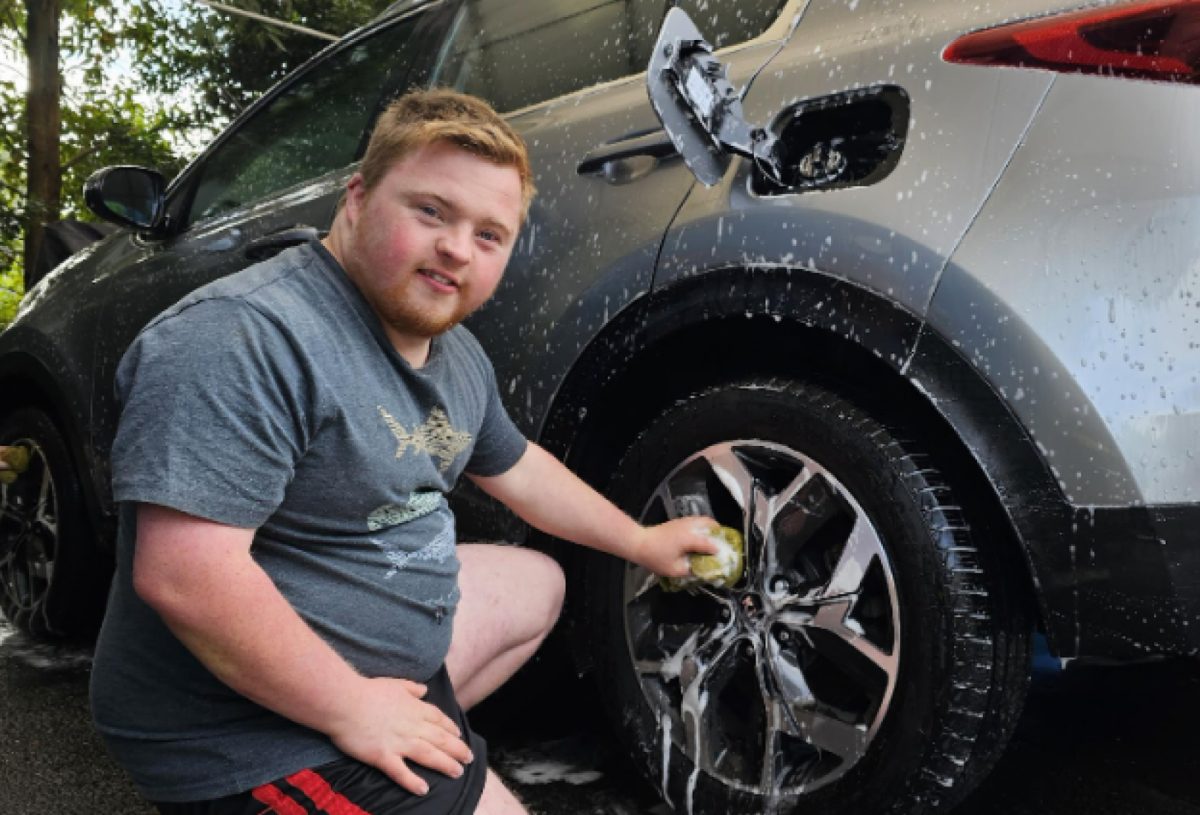
A relaxed outing combining simple vehicle-care activities with time outdoors, a drink, a short walk or another low-pressure community activity.
Start with the person
Car Care & Fresh Air can be broken into small, predictable steps. The participant can choose one practical task, observe, take a break or change the plan. The purpose is confidence, participation and a useful routine—not completing a set list of jobs.
Participant choice, current venue information, access needs, transport, support requirements and the conditions of the day all shape what proceeds.
Traffic-light planning guide
Usually green, with amber moments possible around water, vacuums, cleaning products, heat or unfamiliar equipment.
This is a general planning prompt—not a clinical assessment, diagnosis, formal risk rating or guarantee of suitability. Conditions and individual responses can change.
Hand washing can be quiet. Vacuums, pressure washers or nearby traffic may raise the level, so equipment can be avoided or introduced gradually.
The activity can often be planned in a quieter setting and at a less busy time, subject to the location and permissions.
Tasks can be kept close to the parked vehicle. Check surfaces, seating, shade and safe movement around hoses or equipment.
A visual or written checklist can make the order clear, and the session can stop after one useful task.
Heat, sun, rain and wet surfaces can change the plan. Choose shade, an undercover option or an indoor learning alternative.
A drink, short walk, vehicle checklist, owner-manual activity or early finish can be built into the day.
Potential focus
May suit participants interested in
These are possible starting points, not eligibility rules or promised outcomes. Suitability is discussed individually.
Flexible on the day
A pause, shorter visit, different activity or early finish can be a positive participant-led decision.
Good to know
This is introductory, interest-led support—not mechanical diagnosis, repairs, detailing services or accredited automotive training. Activities only proceed when the parked vehicle, location, equipment and task are suitable and agreed.
Support arrangements, transport and participant-paid activity costs are discussed before the outing. NDIS funding does not automatically cover tickets, meals or ordinary recreational expenses.
Plan around the participant
Tell us what interests the participant, what helps them feel comfortable and what they would like the support to make possible.